
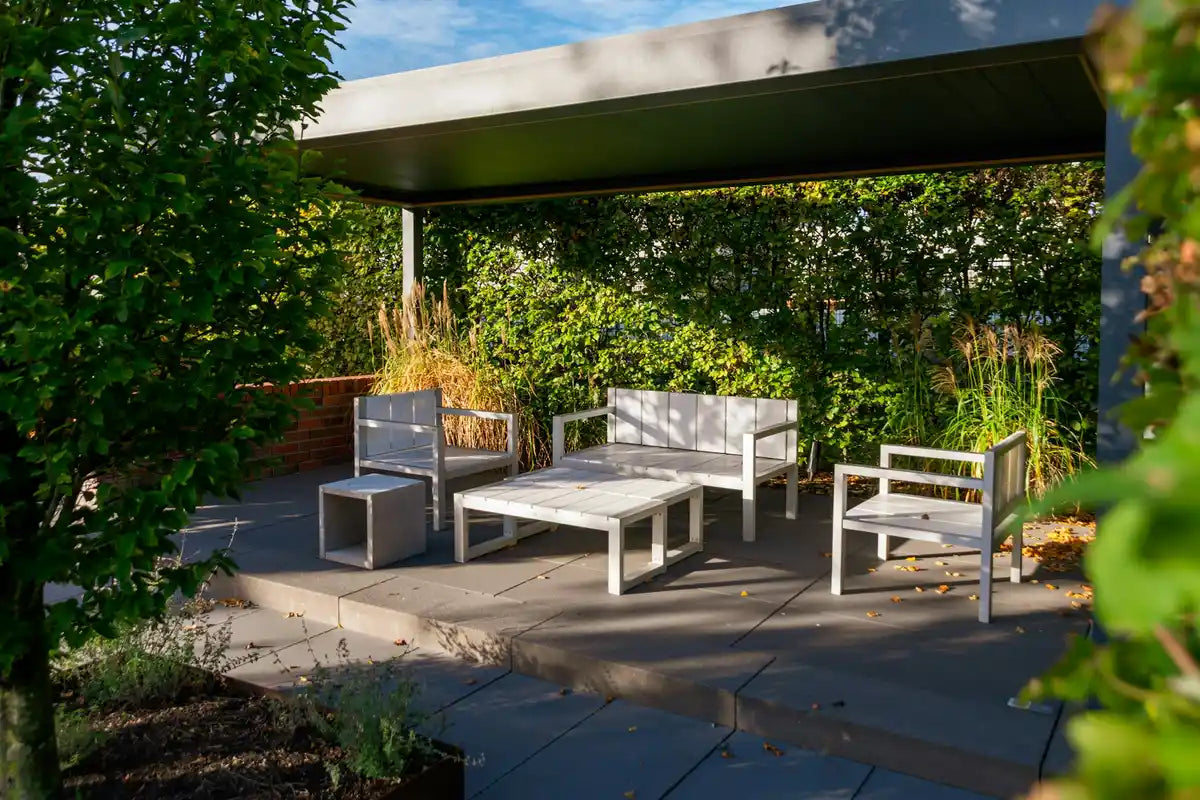
You've narrowed your patio furniture search down to HDPE, but before you buy, you want to know if it really holds up the way brands claim. Is HDPE good for outdoor furniture, or does it just look good in photos and struggle once it's outside year-round? This guide covers how HDPE handles rain, sun, and heavy use, where its limits are, and whether it's worth the upfront cost compared to the upkeep other materials need.
Is HDPE Good for Outdoor Furniture?
Yes, HDPE holds up well outdoors, and it's one of the more durable choices available for patio furniture. Compared to the materials it usually replaces, it avoids most of their common failure points:
- Resists moisture, so it doesn't rot the way wood does
- Won't attract insects, since there's no organic material for them to feed on
- Has no exposed metal surface, so it can't rust
- Doesn't fray or come apart from repeated wetting and drying, unlike wicker
That consistency is the real advantage. HDPE doesn't need seasonal staining, sealing, or treatment to keep performing, which is exactly where wood and wicker start falling behind after the first year or two.
Not every piece sold as HDPE performs the same way, though. Quality depends heavily on how much UV protection is mixed into the plastic and how thick the material is. A well-made piece from a reputable brand such as PatioKingdom can outlast wood furniture by a wide margin, while a cheap version can fade or crack years earlier than expected.

What Are the Advantages of HDPE Outdoor Furniture?
HDPE patio furniture's biggest advantages come down to two things: weather resistance and build strength. Here's what stands out on each front.
Resists Rain, Humidity, and Mold
HDPE is a dense plastic that barely absorbs water. Wood swells when it gets wet and shrinks as it dries, and repeating that cycle for years is what eventually causes cracking and rot. HDPE doesn't go through that cycle at all, and its non-porous surface means humidity doesn't have anywhere to settle in and grow mold or mildew.
Holds Up to Sun and Salt Air
UV rays are what break down most plastics over time, causing fading, chalking, and brittleness. Quality HDPE furniture has UV inhibitors mixed into the material itself, not just sprayed on top, so the color and flexibility hold up much longer. Salt air, common near the coast, speeds up corrosion on metal furniture, but HDPE has no metal parts for it to attack.
Built to Support Real Weight
Strength matters just as much as weather resistance, since a chair or bench needs to hold up under real use, not just survive the rain. The material used in furniture-grade HDPE is much thicker and denser than the thin plastic in disposable outdoor chairs. It's extruded into lumber-style boards, then assembled with the same joinery techniques used in woodworking, including screws, brackets, and glue rated for outdoor use.
Weight capacity does still vary between brands and product lines, so it's worth checking a listed capacity before buying a piece meant for heavier use, like a rocking chair or bench seating multiple people. A quick look at how HDPE holds up against the conditions that damage other outdoor materials:
| Condition | What happens to wood/wicker/metal | What happens to HDPE |
|---|---|---|
| Rain and moisture | Wood swells, cracks, and rots | Barely absorbs water |
| Humidity | Mold and mildew take hold | Non-porous surface resists both |
| Direct sun | Fading, chalking, brittleness | UV inhibitors slow all three |
| Salt air | Metal corrodes | No metal parts to corrode |
| Heavy use/weight | Wicker frays, joints loosen | Furniture-grade boards resist flexing |
What Are the Downsides of HDPE Outdoor Furniture?
HDPE isn't perfect, and the table above doesn't tell the whole story. A few real limits are worth knowing before you buy.
Can Retain Heat in Direct Sun
Extreme heat is the most common complaint. In very hot climates, dark-colored HDPE furniture can get uncomfortably warm to the touch, more so than lighter colors or natural wood.
Quality Varies Between Brands
Quality isn't guaranteed just because a listing says "HDPE." Cheaper HDPE, made without proper UV stabilizers, fades faster, and in some cases can become brittle within just a few years, which defeats the entire point of choosing the material in the first place.
Doesn't Fully Replicate Real Wood
Feel is the other tradeoff. HDPE doesn't replicate the exact texture of real wood. It looks close, especially with a wood-grain finish, but it doesn't have the same warmth or slight grain variation that comes from an actual piece of hardwood. For buyers who want furniture that's indistinguishable from wood up close, that's worth weighing against the lower upkeep.
Is HDPE Outdoor Furniture Worth the Cost Long-Term?
Whether HDPE is worth the cost really depends on how and where you plan to use it. Wood furniture is often cheaper to buy, but it needs yearly staining or sealing to avoid rot, and most pieces still need replacing within 5 to 10 years even with good care. HDPE costs more upfront, and the savings only show up if you're keeping the furniture around long enough to skip several years of that maintenance.
It tends to be worth the cost when:
- The furniture stays outside year-round without a cover
- You'd rather pay more once than repaint or reseal every year
- The piece is somewhere humid, coastal, or otherwise hard on materials
- You're planning to keep it for a decade or more
It's less likely to pay off when:
- You want furniture for a season or two, then plan to replace or move it
- Budget matters more upfront than long-term savings
- You specifically want the look and feel of real, natural wood
- The furniture will mostly sit in shade or under a covered patio, where sun and rain exposure is already limited
For anyone keeping furniture outside long term, especially without daily upkeep, the math tends to favor HDPE once you add up years of wood maintenance against a single purchase.
Conclusion
HDPE is a genuinely durable choice for outdoor furniture, not just a marketing claim. It resists water, sun, and pests better than wood, wicker, or metal, and it holds up to real weight when it's built to furniture-grade thickness. Its main weaknesses, heat retention in dark colors and lower-quality UV protection in cheap versions, are both avoidable by choosing a reputable brand. For most patios and decks, especially ones without daily upkeep, HDPE is worth the investment.
FAQ
Is HDPE good for outdoor furniture in humid climates?
Yes, HDPE performs well in humid climates because its non-porous surface resists the mold and mildew that thrive on damp wood or wicker. It also doesn't absorb moisture, so it won't swell or warp during long stretches of humid weather. This makes it a strong option for coastal or tropical regions.
Is HDPE material good compared to metal outdoor furniture?
HDPE and metal both hold up well outdoors, but for different reasons. Metal can rust or corrode over time, especially near salt air, while HDPE has no metal components to corrode. HDPE is also lighter than most metal furniture, making it easier to move or rearrange.
Does HDPE outdoor furniture fade in direct sunlight?
Quality HDPE furniture resists fading because UV inhibitors are mixed into the plastic during manufacturing, not applied as a coating. Lower-quality HDPE without proper UV protection can fade faster, especially in intense, year-round sun. Checking a brand's warranty length is a reasonable way to gauge how much UV protection is built in.
Is HDPE outdoor furniture good for coastal properties?
Yes, HDPE handles coastal conditions well since it doesn't corrode from salt air the way metal furniture does. It also resists the moisture damage that wood and wicker furniture face near the ocean. Regular rinsing to remove salt residue is still a good idea, even though the material itself won't be damaged by it.

Patio Kingdom
https://www.patiokingdom.com/
Patio Kingdom specializes in HDPE outdoor furniture: fade-resistant, weatherproof, and nearly maintenance-free. We make durable dining sets, lounge chairs, and Adirondacks built to last season after season, at prices that make sense.

Share:
HDPE Outdoor Furniture Explained: Material,and Everyday Use
HDPE vs Polywood: What's the Real Difference?