
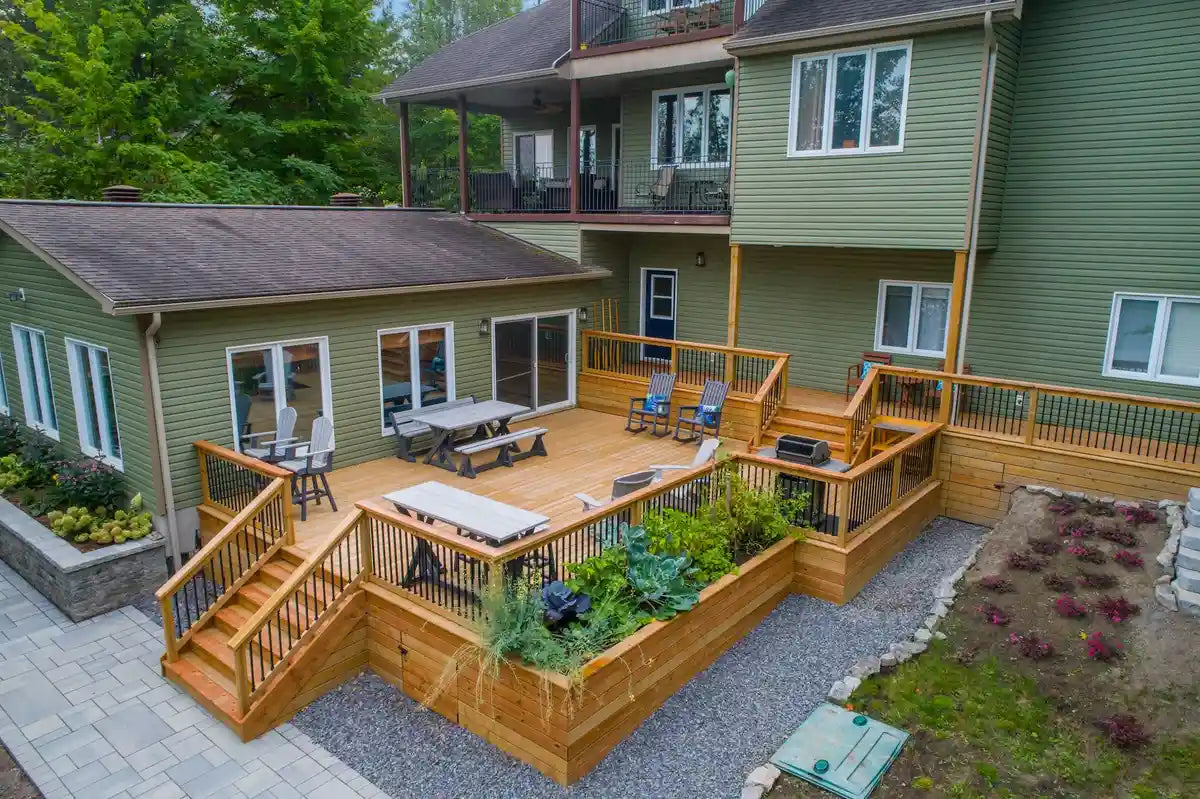
Shopping for patio furniture, you keep seeing the term "HDPE." Is it actually a good material, or just a marketing label? What is HDPE outdoor furniture, exactly? In fact, it's furniture made from high density polyethylene, a tough plastic built to handle sun and rain for years without cracking, fading, or rotting like wood and wicker do.
This guide covers what HDPE is made of, how it's built into furniture, why it holds up outside, and where it works best in your home.
What Is HDPE Outdoor Furniture?
HDPE outdoor furniture is patio furniture made from high density polyethylene. That's a dense, sturdy plastic, molded or shaped into boards and furniture parts. It's not like the thin plastic lawn chairs that warp in the sun. HDPE feels heavier and more solid, closer to painted wood.
Some brands sell this material under names like polywood. But HDPE furniture is just the general term for the whole HDPE outdoor furniture category. You'll see it most in HDPE outdoor chairs like Adirondack and rocking chairs, along with dining sets and benches.
Here's what makes it stand out from other patio materials:
- Molded or shaped into thick, sturdy pieces that hold real weight for years
- Doesn't need paint or a coating for its color or weather resistance
- Color and durability are built into the plastic itself, not added on top
What Is HDPE Material for Outdoor Furniture
HDPE material for outdoor furniture is a type of plastic. The molecules in it are packed together tightly, which is where "high density" comes from. That tight structure is also the reason it barely absorbs water, something the next sections cover in more detail.
Most HDPE furniture is made from recycled plastic instead of brand-new material, usually old milk jugs and detergent bottles. Factories grind this plastic down, mix in UV protection and color, then turn it into board-like pieces used to build furniture frames.
Building the color into the plastic itself, rather than adding it afterward, is what gives HDPE its main advantages over a material like painted wood:
- Color is mixed all the way through the plastic, not painted on top
- Won't show a different color underneath if it gets scratched or scuffed
- Made mostly from recycled plastic, so it's a lower-waste choice too
How HDPE Outdoor Furniture Is Made, and Why It Feels More Like Real Wood
Knowing how HDPE furniture is built explains why it holds up so well outside. The material goes through a few steps before it becomes a finished chair or table.
| Stage | What happens | Why it matters |
|---|---|---|
| Sourcing | Recycled plastic is collected, often old milk jugs and bottles | Keeps cost down and cuts plastic waste |
| Blending | Plastic is melted and mixed with UV protection and color | Sun resistance and color get built in, not added later |
| Forming | Material is shaped into boards or molded into parts | Boards can be worked like wood; molded parts suit curved pieces |
| Assembly | Boards are cut and joined with stainless screws and marine-grade glue | Regular hardware would rust outdoors, so this doesn't |
Once shaped into boards, HDPE gets cut, routed, and put together much like real wood. That's why well-built HDPE furniture can look and feel more like real woodworking, not like a plastic lawn chair.
Why HDPE Outdoor Furniture Holds Up So Well
HDPE furniture got popular for patios because it handles the things that ruin other outdoor furniture. Wood furniture swells and rots when it soaks up rain, wicker furniture frays and fades, and metal furniture rusts. HDPE furniture, on the other hand, barely absorbs water at all, so it doesn't warp, rot, or grow mold, even after sitting outside through a wet season.
It holds up to temperature swings just as well. It expands and shrinks a little with heat and cold without cracking, which is an issue that trips up cheaper plastic furniture.
That weather resistance carries over into how little upkeep the furniture needs day to day:
- No yearly staining, sealing, or repainting, unlike wood furniture
- Bugs can't damage it, since there's no wood for them to eat
- It doesn't soak up stains or grow mildew, since the surface isn't porous
- It often comes with long warranties, sometimes 20 years or more
That said, HDPE furniture isn't indestructible. Extreme heat can soften it a bit, and cheaper HDPE furniture without good UV protection fades faster. Quality really does vary between brands, which is why the manufacturing steps above are worth knowing before you buy.
Where HDPE Patio Furniture Fits Your Space
What is HDPE patio furniture best suited for? Since it shrugs off moisture and sun, it works well in exactly the spots where wood or wicker struggle.
That includes:
- Pool decks, where splashing and humidity are constant
- Uncovered patios that get full sun and rain with no shelter
- Coastal homes, where salt air eats away at metal and wood
- Any space where furniture stays outside all year with no cover
It also suits anyone who wants furniture that just needs less upkeep. HDPE is usually molded with a wood-grain texture and comes in solid colors, so it still looks like real furniture, not a plastic lawn chair, even if it doesn't feel exactly like hardwood.
The Bottom Line
HDPE outdoor furniture comes down to one simple trade-off: you get a material that shrugs off rain, sun, and years of outdoor use, in exchange for a look that's close to wood but not quite the same. For most patios, decks, and pool areas, that trade-off works in your favor, especially if low maintenance matters more to you than a fully natural finish. The quality still varies by brand, so it's worth checking how a piece is made before you buy, not just what it's made of.
FAQ
Is HDPE good for outdoor furniture?
Yes. HDPE holds up better outdoors than untreated wood or basic plastic. It resists moisture, rot, insects, and fading. It barely absorbs water, so it won't warp or grow mold outside. Quality still varies between brands, so it's worth checking for UV protection and warranty length before buying.
Is high density polyethylene outdoor furniture the same as polywood?
Polywood is a brand name. High density polyethylene is the general material several brands use. Not every brand builds it to the same standard, so quality and price can vary even though the base material is technically the same.
How long does HDPE outdoor furniture last?
Well-made HDPE furniture usually lasts 15 to 20 years or more. That's why many brands back it with warranties in that same range. How long it actually lasts depends on the quality of UV protection used and how much sun and heat it gets over time.
Does HDPE outdoor furniture need any maintenance?
Not much. Usually just soap and water to clean off dirt or mildew. It doesn't need staining, sealing, or repainting like wood does, since the color runs all the way through the material instead of sitting on top.
Share: