
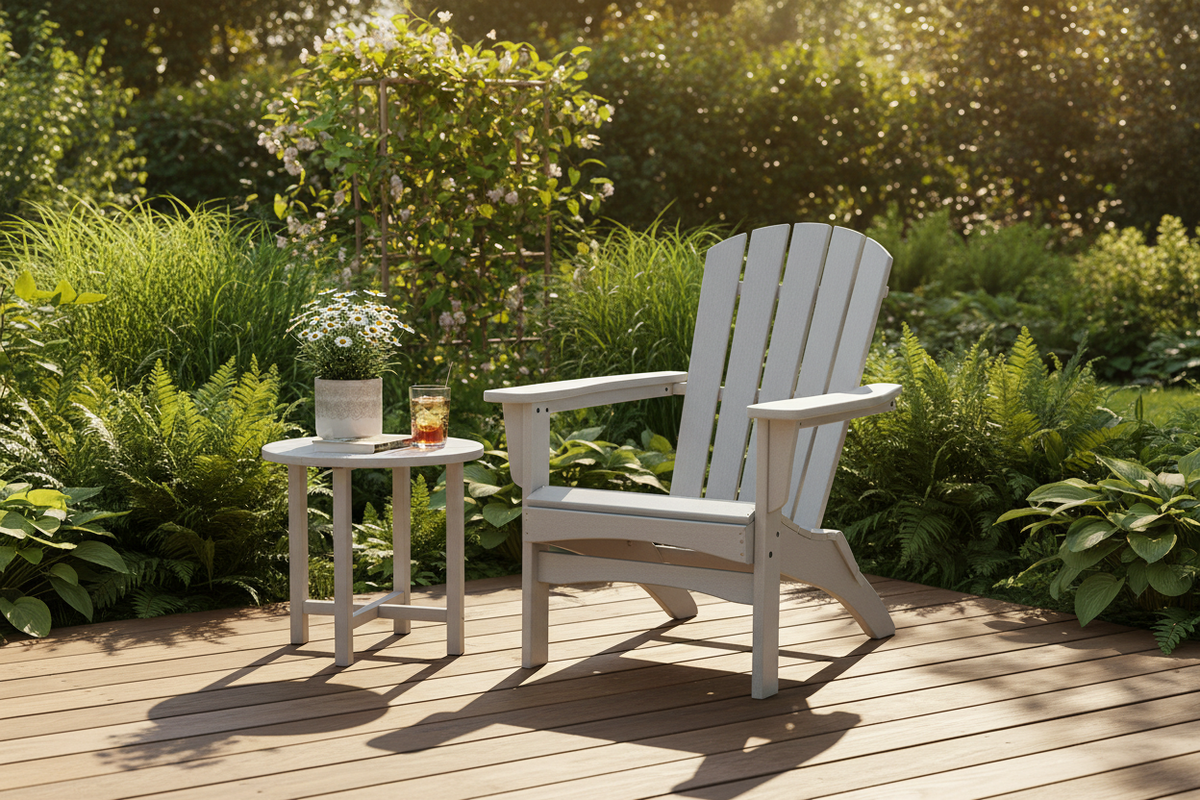
You're eyeing a piece of HDPE patio furniture, but you've heard plastic can turn uncomfortably warm after a few hours outside. Does HDPE furniture get hot in the sun, enough that it's actually a problem? Yes, it can, particularly in darker colors and intense heat, but the effect is manageable and not unique to HDPE. This guide covers why it happens, how much color matters, and what actually helps keep it cooler.
Does HDPE Furniture Get Hot in the Sun?
Yes, HDPE furniture can get noticeably warm in direct sun, especially during peak afternoon hours in hot climates. It's not a defect. Most solid materials left in direct sunlight heat up to some degree, and HDPE is no exception.
How hot it actually gets depends on a few factors working together: the color of the piece, how many hours of direct sun it gets, the surrounding air temperature, and whether it's sitting on a surface like concrete that reflects additional heat. A dark brown Adirondack chair in full Arizona sun in July will get hotter than a white side table under a patio umbrella in Oregon.
The good news is that HDPE cools back down fairly quickly once it's out of direct sun, unlike materials like metal that can hold heat longer after the sun moves.
Why HDPE Furniture Absorbs Heat
HDPE furniture absorbs heat because of a few properties working together, not because of any single flaw in the material. Sunlight hits the surface, gets partially absorbed as heat, and that heat then travels through the piece:
- It's a solid, dense plastic, and dense materials generally hold and transfer heat more readily than lighter, more porous ones
- Darker pigments absorb more wavelengths of light and convert more of that light into heat, the same basic physics that applies to fabric, paint, and asphalt
- It doesn't have the natural insulating air pockets that wood grain or woven wicker have, so heat moves through it a bit more directly
That last point is part of the tradeoff for a material that's otherwise non-porous and doesn't trap moisture. The color factor is the one that matters most in practice, which is why a black car seat gets hotter than a white one parked in the same spot.

Does Color Affect How Hot HDPE Furniture Gets?
Color is the single biggest factor a buyer actually controls. Darker colors like black, dark brown, and navy absorb significantly more heat than lighter shades like white, light gray, or tan.
| Color | Relative heat absorption | Typical surface feel in full sun |
|---|---|---|
| Black or dark brown | High | Can feel uncomfortably warm to bare skin |
| Navy or forest green | Medium-high | Warm but usually tolerable |
| Gray or tan | Medium | Warm, rarely uncomfortable |
| White or light beige | Low | Stays close to ambient air temperature |
This is a genuine tradeoff worth weighing at the time of purchase, not something to fix after the fact. Picking a lighter finish for furniture that will sit in full, unshaded sun for most of the day is a simple way to avoid the issue altogether, especially for pieces that bare skin touches directly, like a chair seat or armrest.
How to Keep HDPE Furniture Cooler
A few practical adjustments can meaningfully reduce how hot HDPE furniture gets, even if you've already bought a darker color.
Add Shade During Peak Hours
An umbrella, pergola, or shade sail over furniture that sees the most direct afternoon sun cuts down heat absorption substantially. Even partial shade for a few hours makes a noticeable difference compared to furniture in full sun all day.
Use Cushions or Covers on Contact Points
A seat cushion or fabric cover on the parts of furniture people actually touch, like the seat and armrests, solves the practical problem even if the furniture itself still warms up. This is often the simplest fix for chairs and benches that get heavy midday use.
Rinse With Cool Water
A quick rinse with a hose brings the surface temperature down fast, since water carries heat away efficiently. This works well right before guests arrive or before sitting down after the furniture has been baking in the sun for hours.
Is Heat Retention a Reason to Avoid HDPE?
For most buyers, no. Heat retention is a real characteristic of HDPE, but it's not unique to the material and it's manageable with color choice and basic shade. Metal furniture, especially dark metal, generally gets hotter than HDPE and stays hot longer. Dark-stained wood also absorbs meaningful heat, just slightly less than plastic in most comparisons.
Where it's worth paying closer attention is in consistently hot, sunny climates with little natural shade, like the desert Southwest, where furniture sits in full sun most of the day. In that kind of environment, color choice and shade planning matter more than they would in a milder or partly shaded yard.
For most patios, a HDPE outdoor furniture piece in a mid-tone or light color, placed with at least some shade during the hottest part of the day, avoids the issue almost entirely. Chairs and benches in particular are worth checking in person or in close-up photos, since HDPE outdoor chairs are where bare skin contact matters most.
The Bottom Line
HDPE furniture does get hot in direct sun, more so in dark colors and intense heat, but the effect is predictable and manageable rather than a dealbreaker. Choosing a lighter color for furniture that sits in full sun, adding shade during peak hours, and keeping a cushion or cover on high-contact spots covers most of the issue. Compared to metal or dark-stained wood, HDPE isn't unusually prone to heat retention. It just needs the same basic planning any outdoor material does in strong sun.
FAQ
Does dark HDPE furniture get hotter than light-colored HDPE?
Yes, darker colors absorb more sunlight and convert more of it into heat, so black or dark brown HDPE furniture typically feels warmer to the touch than white or light gray pieces in the same conditions. This is a general property of color and light absorption, not something specific to HDPE plastic.
Is HDPE furniture hotter than wood or metal in the sun?
It depends on color and finish, but HDPE generally falls between wood and metal. Dark metal furniture tends to get hottest and stays warm longest, while wood, especially lighter or unstained wood, tends to stay cooler. HDPE in a light color often performs similarly to lighter wood finishes.
Can HDPE furniture get damaged from getting too hot?
Quality HDPE with proper UV protection is built to handle normal outdoor heat without warping or degrading. Extremely high, sustained temperatures over many years can gradually affect cheaper HDPE without adequate UV stabilizers, but this is a slow, long-term wear issue rather than sudden heat damage.
Does shade completely prevent HDPE furniture from getting warm?
Shade significantly reduces heat buildup, but furniture in a hot climate can still pick up warmth from the surrounding air even without direct sun. Full or near-full shade during peak afternoon hours is usually enough to keep HDPE furniture at a comfortable temperature in most climates.

Patio Kingdom
https://www.patiokingdom.com/
Patio Kingdom specializes in HDPE outdoor furniture: fade-resistant, weatherproof, and nearly maintenance-free. We make durable dining sets, lounge chairs, and Adirondacks built to last season after season, at prices that make sense.

Share:
HDPE vs Polywood: What's the Real Difference?
Is HDPE Outdoor Furniture Safe for Everyday Use?