
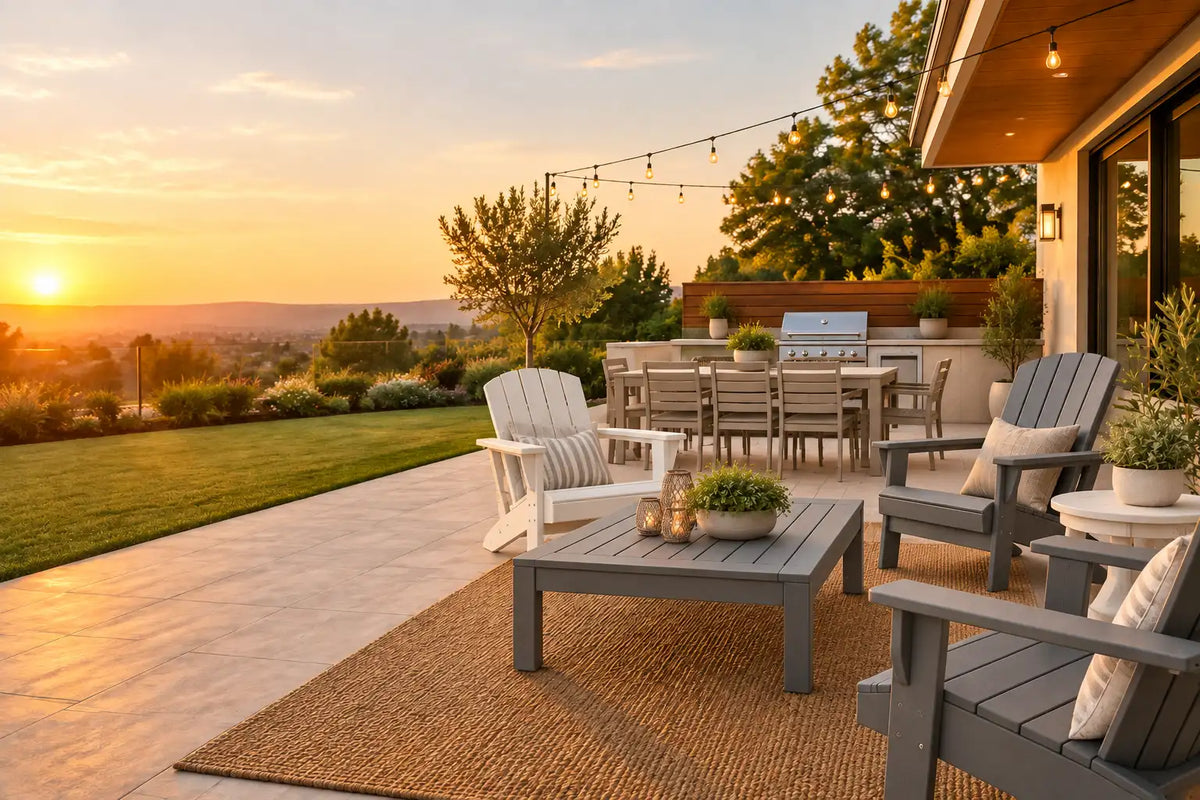
You want patio furniture that lasts, but you'd also like it to be a better choice for the planet. Is furniture made from old plastic actually durable, or is "eco-friendly" just a sales tag? In fact, recycled plastic patio furniture can be both: it turns used plastic into solid boards that hold up outside for years. This guide covers what it is, how it's made, how green it really is, and how to check a brand's recycled content claims before you buy.
What Is Recycled Plastic Patio Furniture?
Recycled plastic patio furniture is outdoor furniture built from plastic that has already been used once. Most of it comes from HDPE, the sturdy plastic used in milk jugs and detergent bottles. Factories clean and melt that plastic, then shape it into thick boards that look a lot like painted wood.
You may also see it sold as poly lumber furniture, since the boards are cut and assembled much like real lumber. Common pieces include Adirondack chairs, dining sets, benches, and side tables.
Here's what makes it stand out from other outdoor materials:
- Gives used plastic a second life instead of sending it to a landfill
- Doesn't rot, splinter, or attract insects
- Color runs all the way through, so it never needs painting or staining
- Heavy and solid, so it stays in place in strong wind

How Is Recycled Plastic Patio Furniture Made?
The process turns everyday plastic waste into furniture-grade boards in a few steps. Knowing these steps helps explain why the finished furniture is so durable.
- Collecting: Used plastic, mostly milk jugs and bottles, is gathered through recycling programs.
- Cleaning and sorting: The plastic is sorted by type, washed, and chopped into small flakes.
- Blending: The flakes are melted and mixed with UV protection and color.
- Forming: The melted plastic is pushed into molds to form solid boards.
- Building: The boards are cut, shaped, and joined with stainless steel hardware.
Because the color and UV protection are mixed in before the boards form, a scratch shows the same color underneath. That's one reason the furniture keeps its look for years without a fresh coat of paint.
Is Recycled Plastic Patio Furniture Eco-Friendly?
For the most part, yes. Its biggest environmental benefits come from what it keeps out of landfills and how long it lasts once it's on your patio.
It Keeps Plastic Out of Landfills
Most plastic in the U.S. never gets recycled. According to the EPA's plastics data, only about 8.7% of plastic was recycled in 2018, while landfills took in about 27 million tons. Milk jugs and similar HDPE bottles did better, at around 29%. Recycled plastic furniture creates a real use for that material, which helps give recycling programs a reason to keep collecting it.
It Lasts for Years, So You Replace It Less
A piece of furniture you buy once and keep for 15 years or more uses fewer resources than one you replace every few seasons. Recycled plastic holds up to rain, sun, and snow, so it doesn't end up at the curb after a couple of summers.
It Skips Stains and Sealers
Wood furniture usually needs stain or sealer every year or two to stay protected. Recycled plastic doesn't need any of that. Soap and water are enough to keep it clean.
What Are the Limits of Recycled Plastic Outdoor Furniture?
Recycled plastic isn't a perfect eco choice, and it helps to know the trade-offs. A few are worth weighing before you buy recycled plastic outdoor furniture:
- It's still plastic, so it doesn't break down naturally at the end of its life
- Recycled content varies by brand, from partly recycled to nearly all recycled
- The boards are heavy, which adds to shipping weight
- It looks close to painted wood, but doesn't have the feel of natural wood grain
The first point has an upside, though. HDPE is widely recyclable, so old furniture can often be recycled again, depending on what your local program accepts.
How Does Recycled Plastic Compare to Other Eco-Friendly Materials?
Recycled plastic isn't the only green option for a patio. Each material has its own trade-offs, so the right one depends on your climate and how much upkeep you want.
| Material | Where it comes from | Upkeep | Main trade-off |
|---|---|---|---|
| Recycled plastic (HDPE) | Used bottles and jugs | Soap and water | Still plastic, heavy to ship |
| FSC-certified teak | Responsibly managed forests | Oil or let it weather gray | High price, harvested wood |
| Reclaimed wood | Old barns, buildings, pallets | Regular sealing | Can rot or crack outside |
| Recycled aluminum | Scrap metal | Very little | Gets hot, light in wind |
For furniture that sits outside year-round with little care, recycled plastic tends to be the easiest to live with. Many of these pieces come in the same styles as wood furniture, from HDPE outdoor chairs to full dining sets.
How Can You Tell If Furniture Really Uses Recycled Plastic?
Not every "eco-friendly" label means the same thing. The FTC's guidance on green claims says that if a product isn't made entirely from recycled material, the label should tell you how much is.
A few simple checks help you compare brands:
- Look for a stated percentage of recycled content
- Check whether the brand says "post-consumer," which means the plastic was used by people first
- Read the warranty, since a long warranty shows the brand trusts its material
- Ask customer service if the product page doesn't say
Brands like Patio Kingdom list their materials on each product page, so you can see what a piece is made of before you order. It's a good habit to compare those details across any HDPE outdoor furniture you're considering.
The Bottom Line
Recycled plastic patio furniture gives used plastic a long second life as sturdy, low-upkeep outdoor furniture. It keeps material out of landfills, skips yearly stains and sealers, and often lasts 15 years or more. It's still plastic, and recycled content varies by brand, so checking the label and warranty matters. If you want furniture that stays outside year-round with little care, it's one of the more practical eco-friendly choices.
FAQ
Is recycled plastic patio furniture durable?
Yes. Recycled HDPE is formed into thick, solid boards that resist rain, sun, snow, and insects. It doesn't rot or splinter like wood, and it doesn't rust like metal. Well-made pieces often last 15 to 20 years or more. Build quality still varies by brand, so checking board thickness and warranty length is a good idea before buying.
Can recycled plastic furniture be recycled again?
Often, yes. HDPE is one of the most widely recycled plastics, so old furniture can usually be broken down and reprocessed. Whether your local program accepts large pieces is a different question. It's worth checking with your city or a local plastics recycler, since many curbside programs only take bottles and containers.
What should I look for in the best recycled plastic outdoor furniture?
Start with a clear recycled content percentage and a note on whether it's post-consumer plastic. Then look at board thickness, stainless steel hardware, and warranty length. A long warranty and clear material details are usually better signs of quality than a general "eco-friendly" label.
Does recycled plastic furniture fade in the sun?
Quality pieces resist fading because UV protection is mixed into the plastic before the boards are formed. Cheaper furniture with less UV protection can fade faster, especially in strong year-round sun. Lighter colors also tend to show fading less than darker ones over time.

Patio Kingdom
https://www.patiokingdom.com/
Patio Kingdom specializes in HDPE outdoor furniture: fade-resistant, weatherproof, and nearly maintenance-free. We make durable dining sets, lounge chairs, and Adirondacks built to last season after season, at prices that make sense.

Share:
HDPE and Resin Outdoor Furniture Compared: Durability, Weight, and Price